
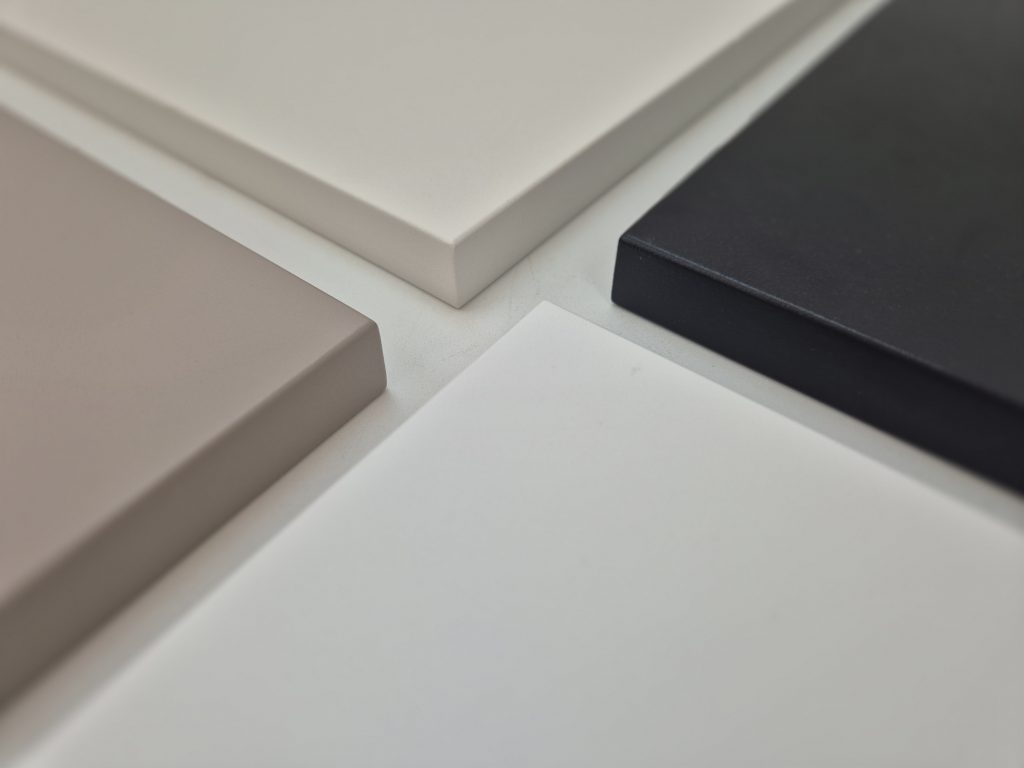
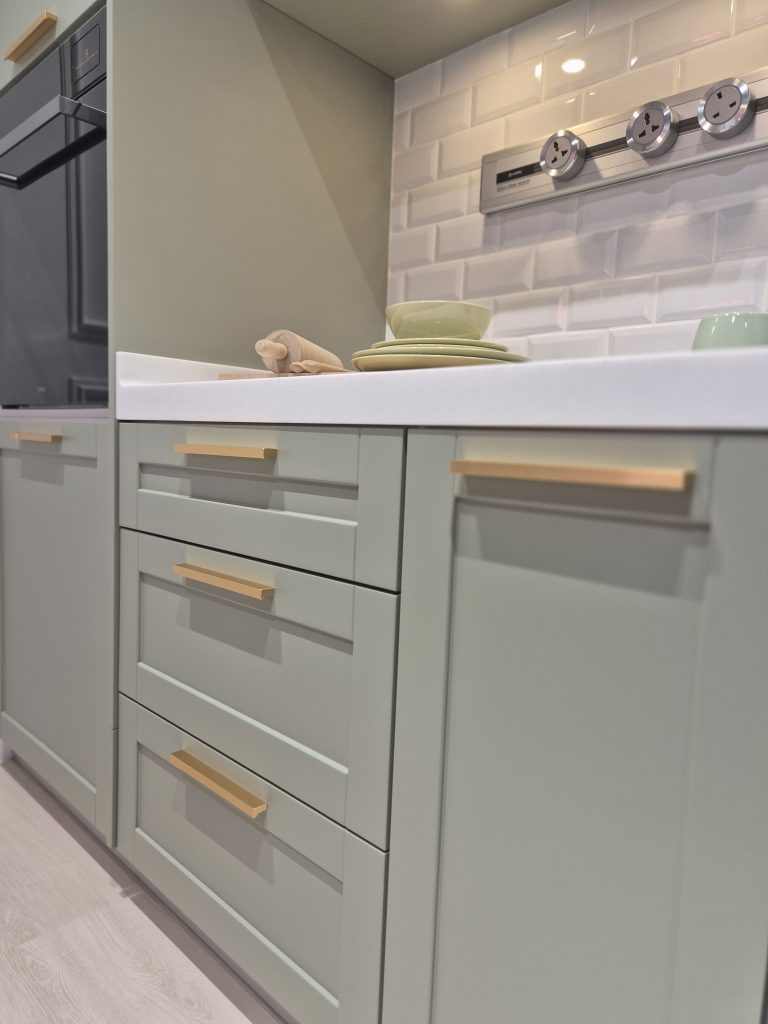
As a wood-based material, MDF is inherently a non or poorly electrically conductive substrate. Understanding this property is the first critical consideration when approaching powder coating on MDF.
Electrostatic application processes charge the powder particles, causing them to adhere to the grounded substrates. Conductivity must be given for this to work, which in the case of MDF is provided by the moisture content of the board and/or the enhancement of the board with conductivity additives during the production process. As the boards are passed through the oven, they dry. This creates stresses in the material, which the board can only withstand through good and consistent compression.
Sanding is a core step in the pretreatment of wood substrates for the powder coating MDF process. If exposed fibers are not removed, the powder particles will adhere to them - affecting the later appearance of the coating. To guarantee adhesion between the dry powder coating and the surface of the MDF board, it must be dry, dust-free, and free of loose components (adhesive residues, etc.) before coating.
Furthermore, controlling board moisture significantly influences the overall success and quality of the surface. Proper preparation at this stage is often the deciding factor between a flawless finish and costly rework.
Special conveyors guide the boards through the cleaning process and the grounding for a clean application. Commonly used are circular conveyors that hold the substrate in place securely during the cleaning process, where it is cleared with compressed air or wiped clean with an antistatic cloth.
If the surface temperature of MDF panels is raised immediately before the application process, this has a positive effect on their conductivity. This step is especially important in powder coating on MDF boards, since raising board temperature compensates for the material's naturally low conductivity. For this reason, special "preheaters" are used prior to applying the coating. These heat components quickly and efficiently to a temperature of approximately 40-60°C using infrared radiation.
Powder coating systems come in single- or two-coat systems. While the single-coat systems open up economic potential due to a high processing speed, unique qualities of furniture surfaces can be produced with the two-coat systems. Both approaches are well-established within the powder coating process, and the choice between them depends on the desired finish quality and production volume.
The powder coating is applied in automated booths, which allows a homogeneous layer build-up. As such, this saves powder and reduces outgassing problems caused by excessively thick layers, or the loss of surface properties with thin powder films. Additionally, using counter electrodes also gives coaters control over layer thicknesses on the plate edges and therefore prevent significant powder overflow.
Conveyor ovens are state-of-the-art for coating sensitive substrates. They can be used to realize different oven zones, which reproduce a defined oven curve. This makes it possible to differentiate the temperature settings throughout the entire oven run and, in the case of modern systems, even over the oven height. Having precise control over your oven is what truly distinguishes a high-quality, professional finish from a subpar one. This makes it a crucial step in any successful MDF powder coating project.
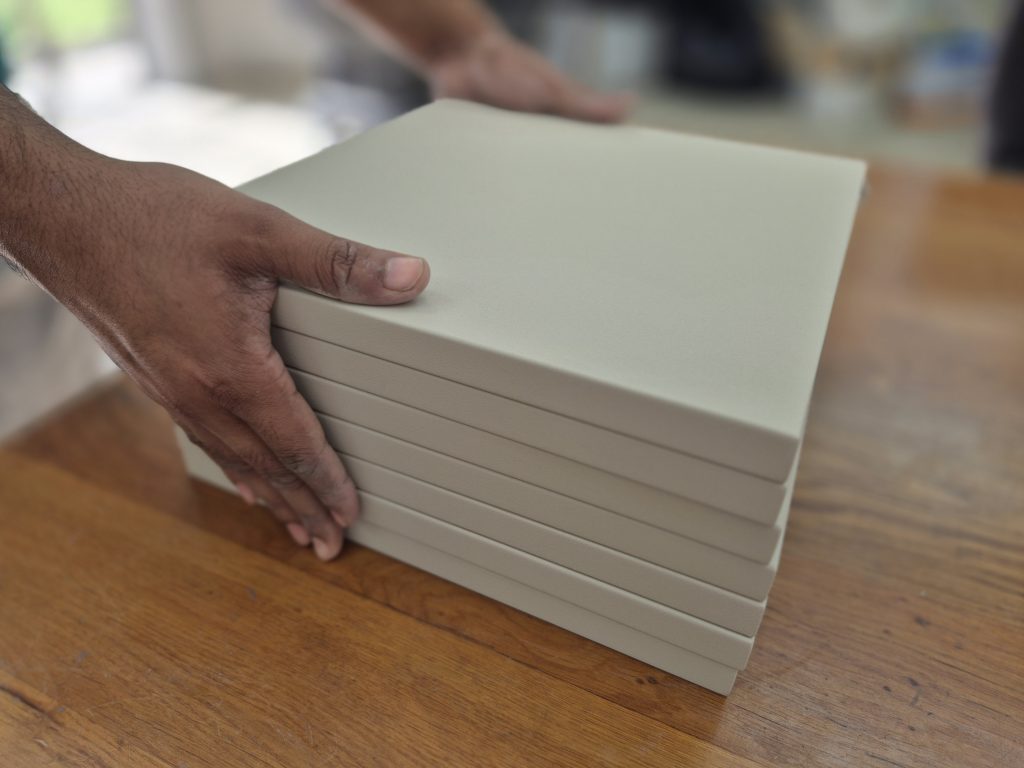
Immediately after coating, the substrates can be removed from the transport system and stacked directly into the shipping package. If a coater uses a high-quality two-layer structure, the substrates sanding in preparation for the second coating pass. Once the final pass is complete and quality checks are signed off, the finished MDF panels are ready for dispatch, which brings the full powder coating MDF process to a close.

+6012-315 9425


All Rights Reserved © 2026 by MDF Powder Coat Sdn. Bhd.
